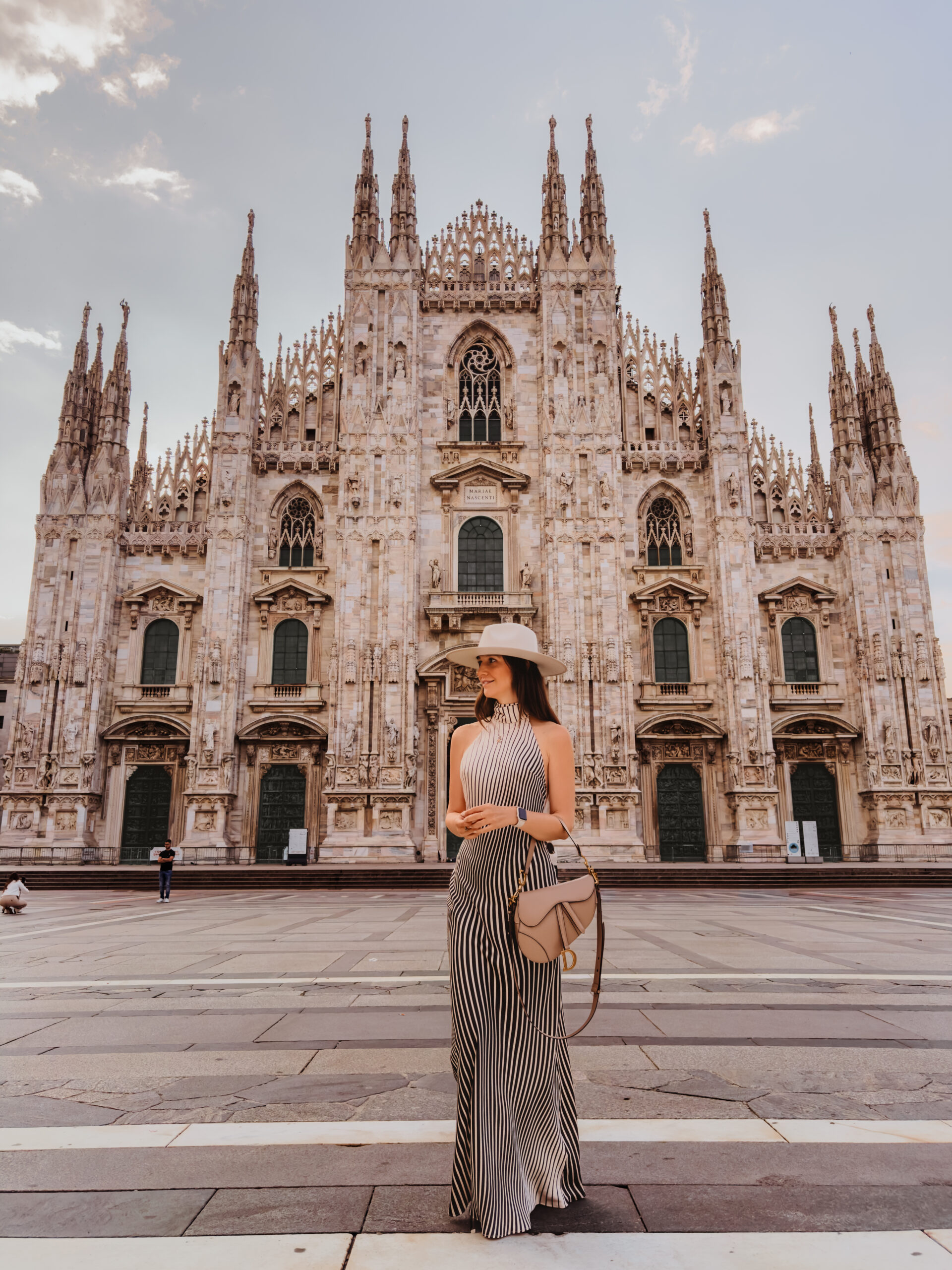
When I travel solo, one of the most common questions I get is: “Who takes your photos?” The answer always surprises people — I do. Every image you see on my blog and Instagram was taken by me, often with no one else around.
Over the years, I’ve learned how to master the art of photographing myself while traveling — from finding the perfect light and angles to using a simple set of tools that make it all possible. It’s part creativity, part planning, and part technical know-how.
In this guide, I’ll walk you through exactly how to take photos when traveling solo — the mindset, methods, and equipment that allow me (and many other creators) to capture beautiful, natural images without relying on anyone else. Whether you’re documenting a weekend getaway or a month-long journey around Europe, these techniques will help you return home with photos that look effortless and professional.
And yes, I’ll be sharing every accessory I use — from tripods to remotes — so you can recreate the same results on your own.
how to take photos when traveling solo
1. Seek Inspiration
Before you even touch the camera, get inspired. Study how other creators capture themselves on the road — not to copy, but to understand what speaks to you.
I often scroll through Pinterest, Instagram, and travel blogs when planning a trip. Look for creators who shoot solo and pay attention to their use of light, movement, and framing.
Start saving poses, settings, and color palettes that make you feel something — the goal is to build a mini mood board for your trip. A few travel photographers and creators I love for inspiration are those who blend storytelling with style. Notice how their photos feel lived-in, not staged.
Pro tip: Create a private Pinterest board for each trip. Before heading out, glance through it to visualize your angles and mood — it will help you shoot more intentionally.
2. Rise Early
If you’ve ever wondered how some travelers seem to have entire landmarks to themselves, the secret is simple: they got there before everyone else.
The best time to shoot at iconic spots is right after sunrise — the light is soft, the air is calm, and crowds haven’t arrived yet. This is when the city feels yours.
Whether it’s the Trevi Fountain, the Louvre courtyard, or a coastal viewpoint, those early hours are pure magic for solo photographers.
Bring coffee, embrace the quiet, and enjoy that feeling of having the world to yourself — it’s part of what makes solo travel so special.
3. Perfect Your Poses
Taking your own photo isn’t about striking a stiff pose — it’s about movement and confidence.
Practice different poses before your trip: walking, turning, adjusting your hair, sitting naturally, or simply looking away from the camera. These small movements make your photos feel spontaneous. If you need help, follow creators or posing coaches, who break down how to pose naturally for travel photos.
Practice at home. The more comfortable you get, the less awkward it feels once you’re in front of the lens.
4. Dress the Part
You don’t need to hike through Cinque Terre in a dress, but what you wear in photos should make you feel like your best self.
Choose clothes that move beautifully and reflect the mood of the destination. In Paris, it might be a tailored coat and boots. In Greece, linen and neutrals. In Amalfi, something breezy and bold.
When you feel confident in your outfit, it shows. Always pack one or two outfits that photograph well, even if you’re traveling light. I plan my “photo day” outfits in advance and keep them ready for key locations.
5. Ask a Stranger
Sometimes, spontaneity wins. If you’re in a safe, busy area and feel comfortable, don’t hesitate to ask a fellow traveler to take a photo for you.
Offer to take theirs first — it usually builds trust and ensures they’ll take care with your shot.
Give simple direction (“Just tap here and hold until it focuses”) and show them an example of how you’d like the frame to look. You’ll be surprised how often this turns into a lovely human connection moment.
6. Join a Photography Tour
If you’re visiting a photogenic city, joining a local photography tour can be a great way to capture high-quality shots and learn from a professional.
Some tours even focus on smartphone photography or golden-hour sessions — ideal for solo travelers.
I love booking one early in my trip because it helps me learn where the best light and backdrops are, which I can revisit later for my self-shoots.
7. Hire a Photographer
If there’s a special occasion or destination you really want captured — think Santorini, Paris, or Positano — consider hiring a local photographer. Flytographer connects travelers with vetted local photographers who know the best locations and lighting.
It’s a worthy investment for milestone trips, birthdays, or just to have beautiful memories without the stress of setting up every shot yourself.
8. Learn the Basics
You don’t need a photography degree — just a few foundational skills can completely transform your photos. Learn how to use natural light, understand framing (rule of thirds, leading lines), and pay attention to backgrounds.
When editing, keep your photos bright but balanced. Avoid filters that distort colors or textures — the most timeless images always look natural.
I edit everything on Lightroom Classic Desktop, but even Lightroom Mobile is a game-changer. You can apply presets, adjust color tones, and save your own editing style so your feed looks cohesive and elevated.
9. Use Presets
Presets are essentially pre-saved editing styles that help your images look consistent and polished.
You can buy them from creators whose aesthetic you admire or create your own inside Lightroom.
They’re especially helpful when traveling — you can edit quickly between locations while maintaining your signature look.
10. Back Up Your Photos
The last thing you want after a trip is to lose your photos. Always back up your images in at least two places:
Cloud storage (like Google Drive, Dropbox, or iCloud)
Portable SSD
After each shooting day, I upload everything to the cloud before bed. It’s a small habit that saves heartbreak later.
My Travel Photography Kit
iPhone (with RAW functionality)
Every photo you see on my blog and Instagram is taken on my iPhone. It’s proof that you don’t need a professional camera to capture beautiful, high-quality travel photos. The iPhone’s RAW functionality allows for incredible detail and flexibility when editing — perfect for creating those crisp, natural tones that still feel real.
That said, my long-term goal is to upgrade to the Sony Alpha 7 IV Full-Frame Mirrorless Camera. It’s lightweight, professional-grade, and produces stunning image quality — ideal for travel creators who want to elevate their work while keeping their gear compact and versatile.

SIRUI AM-254 Carbon Fiber Tripod
This tripod has been with me for over five years, and it’s hands down one of the best investments I’ve made for solo travel photography. It’s sturdy but lightweight — perfect for carrying through airports or cobblestone streets — and the non-slip leg design keeps it stable even on uneven surfaces.
What I love most is its versatility: it works seamlessly with both a phone mount and a camera, making it ideal for creators who shoot across devices. Whether I’m setting up a wide cityscape shot or capturing golden hour on the coast, this tripod is always reliable and easy to use.

ULANZI ST-02S Aluminum Phone Tripod Mount
A reliable phone mount is non-negotiable for solo travel photography, and this one has been my go-to for years. The ULANZI ST-02S Aluminum Mount is compact, durable, and incredibly easy to use. Its metal build feels sturdy enough for long shooting days, and the adjustable grip fits almost any phone size — with or without a case.

Bluetooth 5.0 Remote Shutter
This tiny bluetooth remote shutter is my secret weapon for solo photography. It connects instantly via Bluetooth and lets me capture photos from a distance without rushing back and forth to the camera. I love how discreet it is — I can easily hide it in my hand or trigger multiple shots while moving naturally, which helps my photos look effortless and candid.
You can also use an interval shooting app that automatically takes photos every few seconds, but I personally prefer the control and precision of a Bluetooth remote. It’s reliable, lightweight, and essential for anyone taking their own photos while traveling solo.

MOFT Phone Tripod Wallet
This clever little gadget is one of my favorite travel accessories — especially when setting up a tripod is not an option. The MOFT Phone Tripod Wallet doubles as a slim cardholder and a mini tripod that folds out in seconds.
I use it constantly in cafés, restaurants, and hotel rooms when I want to capture a cozy moment without drawing attention. It props up my phone at multiple angles — perfect for lifestyle shots, time-lapses, or filming quick Reels. It’s lightweight, fits in any purse, and makes solo content creation so much easier on the go.

Pivo Equestrian Pod
For capturing motion, the Pivo Equestrian Pod is a game-changer. It automatically tracks your movement, keeping you perfectly centered in frame while you walk, turn, or explore. I use it mostly for video content — especially when filming clips with movement, like walking through a piazza or exploring a scenic overlook.
The setup is quick and app-controlled, so you can start recording in seconds. For solo travelers who want to add cinematic motion to their content without needing another person to film, this tool is worth every penny.

DJI Flip (DJI RC-N3)
What makes the DJI Flip (DJI RC-N3) so powerful for solo creators is its advanced subject tracking. It locks onto you and follows your movement with precision — delivering stunning close-up tracking shots that genuinely feel like you have your own personal cameraman traveling with you.
Whether I’m walking through vineyards, exploring a coastal path, or filming in a city square, the smooth, intelligent tracking keeps me perfectly framed and in focus. The footage looks cinematic, the stabilization is flawless, and the overall setup is lightweight and intuitive. It’s one of the best tools for adding movement, depth, and storytelling to solo travel content.

Anker Prime Power Bank (20,100mAh 3-Port Portable Charger)
When you’re filming and photographing everything on your phone, battery life becomes non-negotiable. The Anker Prime Power Bank (20,100mAh) is my go-to because it has the power and reliability I need while still being TSA-approved for flights.
With three ports, it can charge multiple devices at once — my phone, remote, and even my laptop — which makes it ideal for long shooting days or travel days when outlets are scarce. It’s slightly on the heavier side, but that extra weight is a trade-off I’m happy to make for the peace of mind it provides. When you’re traveling solo, knowing you’ll never run out of battery feels like having an invisible safety net in your bag.

Samsung T9 Portable SSD
For backing up photos and videos on the go, the Samsung T9 Portable SSD is my trusted storage solution. It’s compact, lightning-fast, and comes in multiple sizes — perfect for organizing both short trips and extended travel content.
I use it alongside my cloud backups to make sure every file is safe, even without internet access. The transfer speed is incredible, which means I can quickly offload large RAW photo files and 4K videos straight from my phone or laptop. It’s durable, travel-friendly, and gives me total peace of mind knowing that my work — and memories — are securely stored in more than one place.

Magnetic SSD for iPhone (Twopan & SanDisk)
If you shoot ProRes videos on your iPhone, you already know how quickly those files can eat up internal storage. That’s where a magnetic SSD comes in — and the models from Twopan and SanDisk are two of the best options I’ve tested.
They attach directly to the back of your iPhone, letting you record high-resolution video straight onto the drive without interruptions or lag. The setup is sleek, secure, and perfect for solo creators who want to capture cinematic-quality content without constantly worrying about running out of space.
I keep one attached whenever I’m filming longer sequences or travel vlogs — it’s a simple addition that makes a huge difference in both workflow and peace of mind.

DJI Osmo Mobile Gimbal
While not essential, the DJI Osmo Mobile Gimbal is one of those tools that takes your video content from good to cinematic. It stabilizes your phone while you walk or pan, eliminating that handheld shake and creating smooth, fluid motion — perfect for travel Reels and vlogs.
It’s lightweight, folds down easily, and pairs seamlessly with the DJI app for intuitive control. I especially love using it for walking sequences, panoramic shots, or slow reveals of beautiful locations. It’s a small upgrade that makes your footage feel polished and professional — even when you’re filming solo.

Traveling solo doesn’t mean you have to compromise on capturing beautiful memories — it just means learning to become your own creative team. With the right mindset, a bit of practice, and a few well-chosen tools, you can create photos and videos that truly reflect the magic of your journey. Every item in my kit was chosen for one reason: to make solo content creation feel effortless, empowering, and fun. Whether you’re documenting quiet café mornings or dramatic coastal sunsets, these tools will help you tell your story — beautifully and on your own terms.